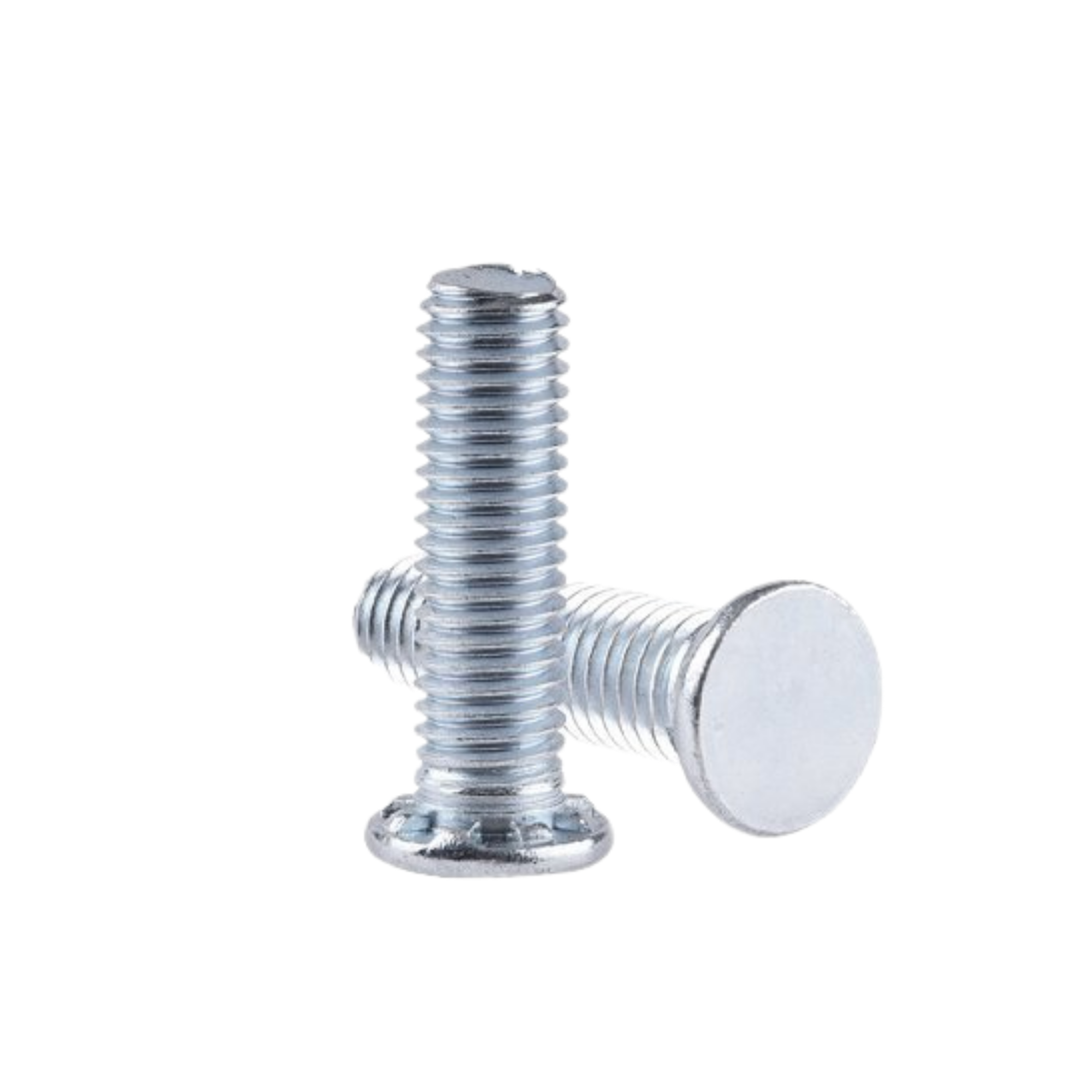
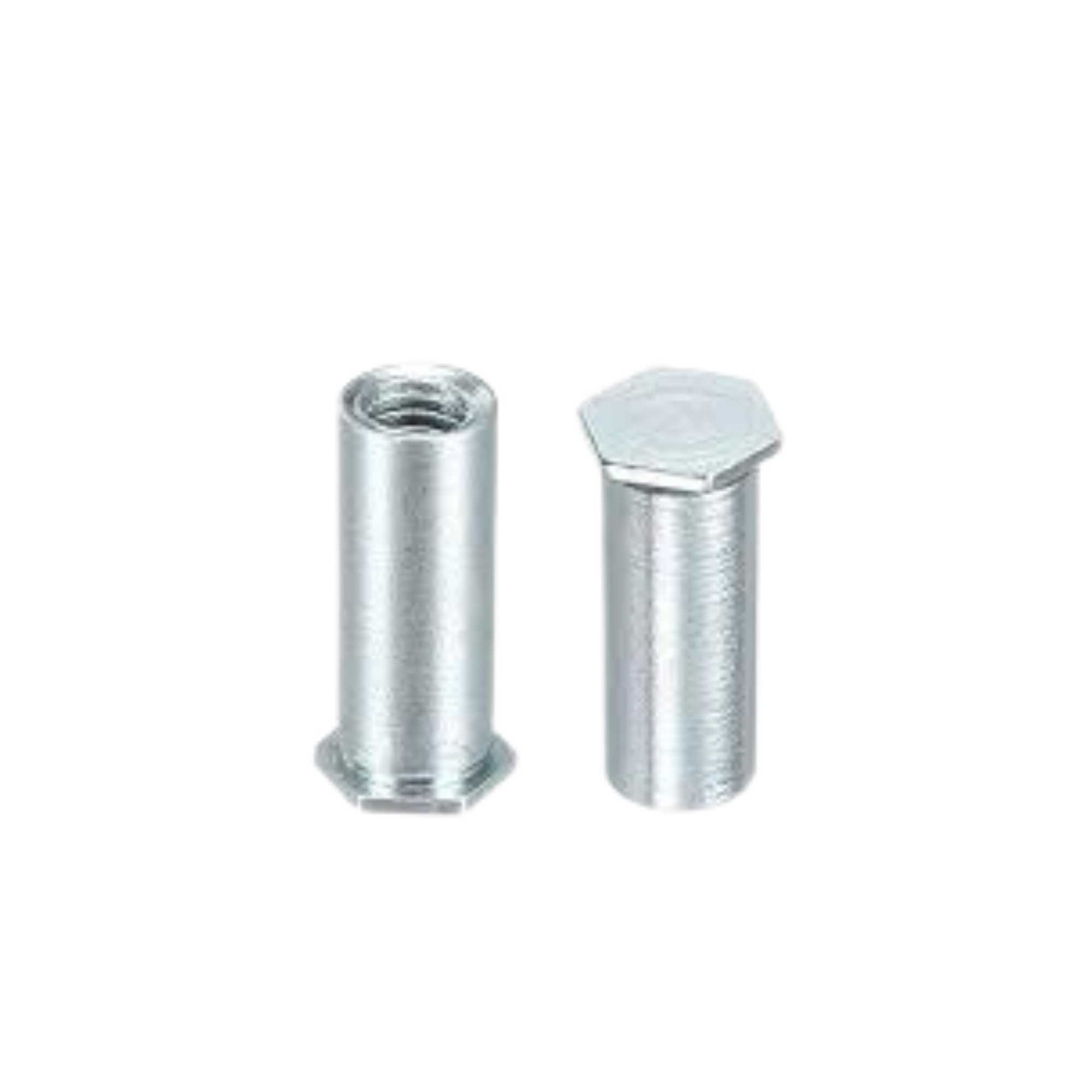
Clinch Nuts · Clinch Studs · Clinch Standoffs · Permanent Press-In Threads for Sheet Metal
A self clinching fastener is a threaded nut, stud or standoff that is permanently pressed into a thin sheet metal panel using a squeezing force. When installed, the fastener displaces the surrounding metal into a specially designed annular recess in its shank — locking it permanently in place with high resistance to both push-out and torque-out forces. The result is a strong, reusable thread permanently embedded in the panel.
Self clinching fasteners are the standard solution wherever sheet metal is too thin to hold a conventional tapped thread — typically panels under 3mm. They are widely used in electronics enclosures, server chassis, telecom panels, electrical switchboards, precision sheet metal fabrication and industrial control panels across India.
Installation requires only a parallel-acting press — no welding, no adhesive, no heat. The fastener installs flush on the head side, leaving the reverse side of the panel clean.
Self clinching works through controlled cold forming of the host sheet metal. The fastener must always be harder than the sheet it is installed into — only then will the sheet deform into the fastener's undercut rather than the fastener deforming into the sheet.
A precisely sized round hole is punched or drilled in the sheet metal. The hole diameter is critical — too large and the fastener will not lock; too small and it will not seat. Each fastener type has a specified hole size.
The fastener is placed in the hole and a parallel-acting squeezing force is applied — by bench press, hydraulic press or pneumatic press. The fastener's knurled or serrated clinch ring forces the sheet metal to cold-flow into the annular undercut groove.
Once installed, the fastener is permanently part of the panel. The displaced metal locked into the undercut resists push-out force. The serrations or knurls resist rotation under torque. The head side is flush — no protrusion on either side.
Critical Installation Rule
Never install self clinching fasteners after painting or powder coating — the coating fills the undercut and prevents proper metal displacement. Always install into bare, uncoated sheet metal. If the assembly will be plated, install unplated fasteners first, then plate the full assembly.
Server chassis, networking equipment housings, control panels and switchboards — all require permanent threads in thin sheet panels. Clinch nuts and standoffs provide board mounting and panel assembly threads that survive repeated assembly and disassembly.
Telecom rack enclosures, antenna mounts and outdoor cabinets use self clinching fasteners extensively — clinch studs and standoffs allow quick panel assembly and disassembly in the field without the risk of loose nuts falling into equipment.
Precision fabricated enclosures, brackets and frames where conventional tapping is not possible due to material thickness. Clinching provides clean, consistent threads without distorting the panel geometry.
Clinch standoffs are the standard method for mounting PCBs to chassis panels with a precise, fixed standoff height. They provide consistent board-to-panel spacing and strong, reusable mounting threads without separate loose hardware.
Sheet metal brackets, subframes and panels in automotive and industrial equipment manufacturing. Clinch studs allow components to be bolted to thin panels without loose nuts — reducing assembly time and eliminating dropped fasteners on the production line.
Electrical panel builders across India use clinch nuts extensively for DIN rail mounting, busbar supports and cover plate fixing. The flush installation keeps panel interiors clean and prevents loose hardware from creating short circuits.
A self clinching fastener is a threaded nut, stud or standoff that is permanently pressed into thin sheet metal using a squeezing force. The fastener displaces the surrounding metal into its undercut groove, locking permanently in place with high push-out and torque-out resistance. No welding, heat or adhesive required.
A clinch nut provides a permanent internal (female) thread — a bolt or screw goes into it. A clinch stud provides a permanent external (male) thread protruding from the panel — a nut goes onto it. A clinch standoff is a threaded spacer with internal threads on both ends — used to create a fixed gap between two panels or to mount a PCB at a set height above a chassis.
Self clinching fasteners work from 0.5mm sheet thickness upward. Each fastener has a minimum sheet thickness specified by its dimensions — the sheet must be thick enough to allow adequate material to cold-flow into the undercut. Always check the minimum sheet thickness in the fastener datasheet for the specific diameter and thread size you are using.
Yes, but the fastener must be harder than the host sheet. Standard carbon steel clinching fasteners are not suitable for stainless steel panels — you need specially hardened series fasteners (equivalent to PEM SP-type) designed specifically for stainless host material. Contact us to discuss the right specification for your application.
Excel Trading Corporation stocks clinch nuts, clinch studs and clinch standoffs at our store — 163, Sadar Patrappa Rd, Kumbarpet, Bengaluru 560002. We supply across Karnataka and India. Call +91 7204435253 or email info@exceltrading.in for pricing and availability.