Click your base metal thickness to see the recommended product.
Automotive
Body panels, dashboard brackets, trim clips, bumpers
Construction
Shear connectors, RCC composite beams, refractory anchors
Switchboards
Panel mounting, earthing studs, busbar supports, transformers
Boilers & Vessels
Refractory anchors on boiler tubes, pressure vessel insulation
What is a weld stud and how is it different from a bolt?
A weld stud is permanently fused to a base metal surface by a stud welding gun — the weld completes in milliseconds from one side only. No hole is required. The result is a stronger joint than the base metal itself. A bolt requires a drilled and tapped hole or a nut on the reverse side. Weld studs are used where drilling is not possible, where reverse access is unavailable, or where production speed makes drilling impractical.
What is the difference between a CD and a drawn arc weld stud?
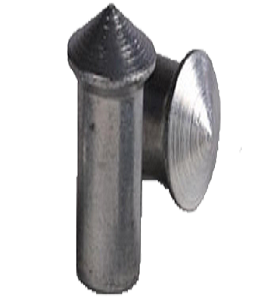
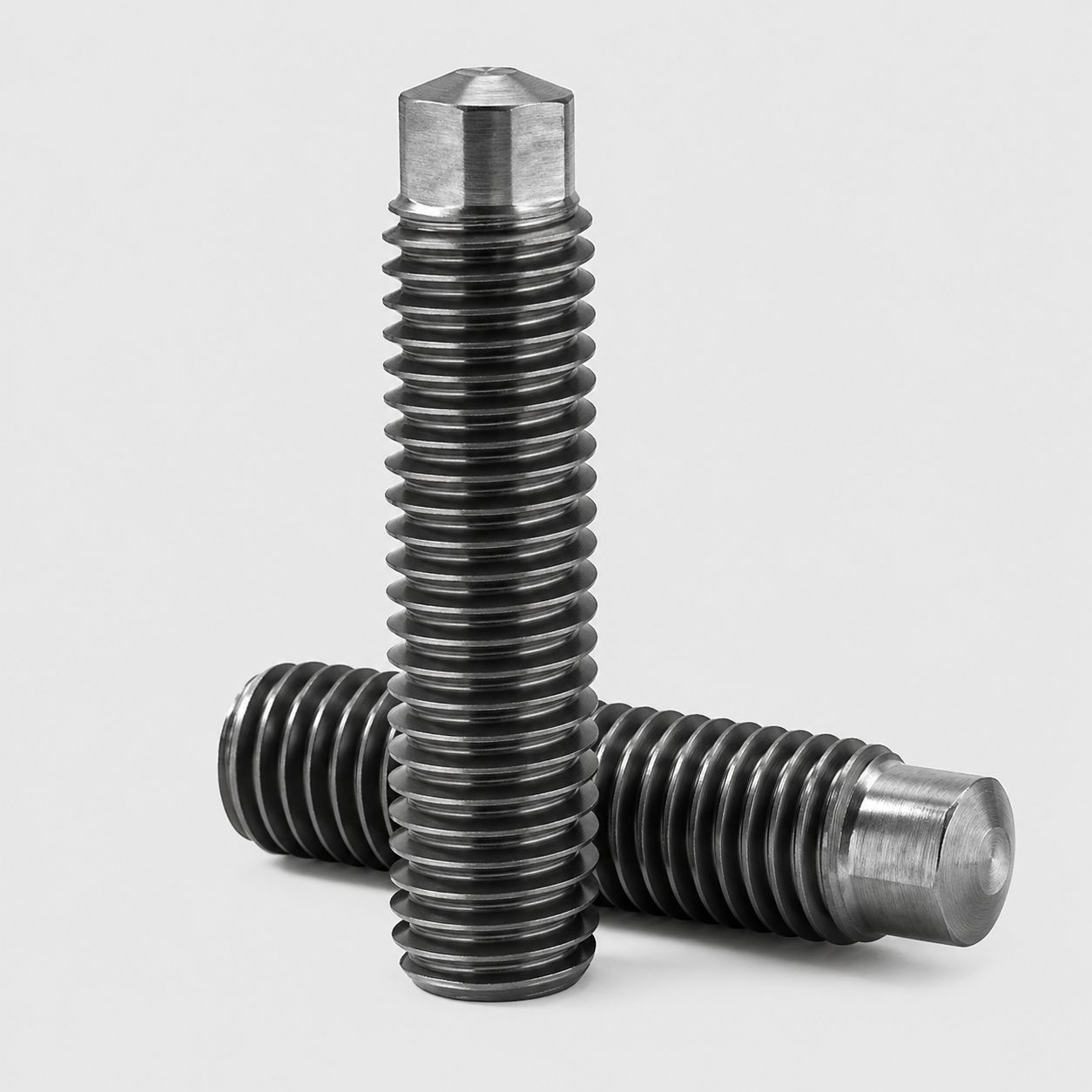
CD studs weld in 1–6 milliseconds with minimal heat — designed for thin sheet from 0.5mm where burn-through must be prevented. They have a conical tip and require no ferrule. Drawn arc studs weld for up to one second, producing deep penetration and a very high-strength weld — designed for plate from 3mm and structural applications. They have a flux ball tip and require a ceramic ferrule for every weld. The two types are not interchangeable — match the process to your base metal thickness.
What is a ferrule and why is it only used with drawn arc studs?
A ferrule is a ceramic ring that fits around the stud tip before a drawn arc weld. Its four functions are: confining the molten metal at the stud base, protecting the weld pool from atmospheric oxidation, shielding the welder's eyes from the arc, and providing an escape path for weld gases. One ferrule is used for every drawn arc stud weld and is broken off after the weld cools. CD studs do not require ferrules because the weld time is so short that the molten pool is confined by surface tension and the rapid solidification.
Why are mild steel CD weld studs copper coated?
Copper coating on mild steel CD studs improves electrical conductivity between the stud and the welding gun chuck, ensuring consistent arc ignition every time. It also provides corrosion protection during storage and transit. Without the copper coating, arc initiation becomes inconsistent, leading to cold welds or misfires. Copper coating is standard on all externally threaded mild steel CD studs. Stainless steel studs do not have copper coating — they are self-passivating.
What are the advantages of weld studs over drilling and tapping?
Each weld takes less than one second — far faster than drilling, tapping and threading. No reverse-side access is needed. The weld joint is stronger than both the stud and the base metal. Thin sheet can be used without distortion. No nuts, washers or backing clips are required. In volume production — automotive, switchboards, transformers — weld studs reduce assembly cost significantly compared to drilled and tapped fastening.
Can weld studs be welded to galvanised or painted surfaces?
Painted surfaces must always be cleaned to bare metal at the weld point — paint prevents arc initiation and produces a cold weld with near-zero pull-out strength. Galvanised steel can be welded to using CD studs, though the zinc coating burns off in the immediate weld area. For drawn arc on galvanised plate, brief wire brushing at the weld point gives more consistent results. Drawn arc tolerates slightly more surface contamination than CD due to the higher energy arc.
How do I test whether a weld stud has been correctly installed?
Two tests are used. The visual check: inspect for 360° weld flash (CD) or a complete fillet (drawn arc) around the full stud base immediately after welding — any gap indicates incomplete fusion. The bend test: bend the stud 30° from vertical using a pipe sleeve or hammer. The weld must hold with no cracking at the base. Perform the bend test on two studs at the start of each shift and after every parameter or size change.
How short does the stud become after welding?
Both CD and drawn arc studs lose a small amount of length during the weld as the tip and base metal melt together. For CD studs, the loss is typically 1–2mm depending on diameter. For drawn arc studs, the loss is approximately 3–5mm for larger diameters. Always specify the required length after welding — not the nominal stud length — when ordering. We can advise on the correct pre-weld length for your application.
Where can I buy weld studs in Bangalore?
Excel Trading Corporation stocks CD and drawn arc weld studs in copper coated mild steel and stainless steel at our Kumbarpet store in Bengaluru. Weld studs are one of our speciality products — we supply to automotive fabricators, construction companies, switchboard manufacturers and electronics enclosure builders across Karnataka and India-wide. Call +91 7204435253 or email info@exceltrading.in for sizes, pricing and bulk quotes.