DIN 7504 Standards & Drill Point Selection Guide
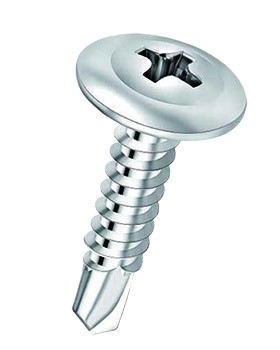
Self drilling screws are manufactured to DIN 7504 — the German Institute for Standardisation standard that is globally recognised and adopted in India as IS 18476, with the equivalent international standard being ISO 15482. The DIN 7504 standard defines three main types based on head style — DIN 7504 K (hex washer head), DIN 7504 P (countersunk / CSK head) and DIN 7504 O (pan head) — and specifies the drill point capacity based on screw diameter.
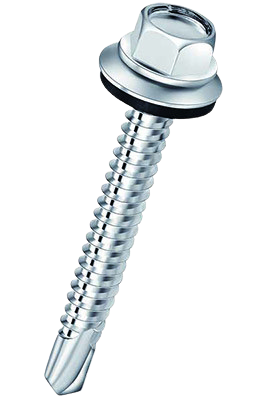
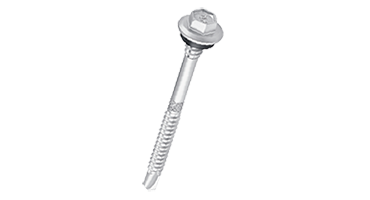
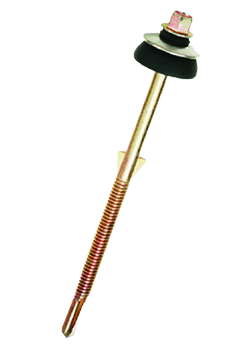
DIN 7504 K — Hex Washer Head
The most widely used type. Hexagonal head with integrated flange washer for superior load distribution and a weather-tight seal. Used with EPDM washers for metal roofing, facade cladding and purlin-to-sheet connections.
Also known as: Hex Head TEK Screw · ISO 15480
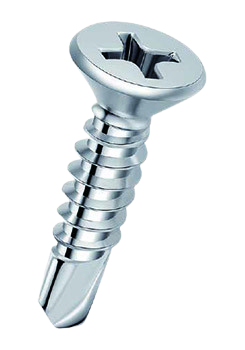
DIN 7504 O — Countersunk Head (CSK)
Countersunk Phillips head for a completely flush finish. Used in applications where the screw head must sit level with the surface — sheet metal panels, steel sections, furniture and general fabrication. The countersunk angle prevents surface protrusion.
Also known as: CSK Head TEK Screw · ISO 15482
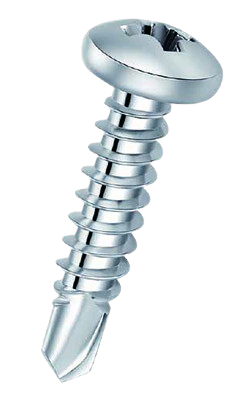
DIN 7504 P — Pan Head
Rounded pan head for general sheet metal work, light fabrication and HVAC ductwork. The domed head profile provides a larger bearing surface than CSK without the bulk of a hex head — ideal for thin gauge steel and electrical enclosures.
Also known as: Pan Head TEK Screw · ISO 15481
Drill Point Capacity — Which DIN 7504 Drill Point Do I Need?
Within each DIN 7504 head type, the drill point number determines how thick a steel section the screw can penetrate without a pilot hole. This is defined by the screw diameter and drill point flute length under the DIN 7504 standard. A higher drill point number means a longer flute and the ability to penetrate thicker steel.
Important Selection Rule
Always measure the combined total thickness of all metal layers being joined — not just one sheet. If you fall between two drill point numbers, always choose the higher one. The screw will snap if the threads contact the steel surface before the drill point has fully penetrated.
Why Use Self Drilling Screws?
No Pilot Hole Required
The built-in drill point eliminates the separate drilling step. One tool, one operation — saves significant time on large-scale projects like roofing and steel framing.
Faster Installation
Drill, tap and fasten in a single pass reduces installation time by up to 50% compared to conventional pilot hole and screw methods — critical for high-volume production and site work.
Ideal Hole Size Every Time
Because the screw drills its own hole, the thread engagement is always optimal — resulting in better grip, better alignment and a tighter, stronger connection than pre-drilled assemblies.
Corrosion Resistant Options
Available in zinc plated and ruspert coating for outdoor applications. Ruspert coated screws offer significantly higher salt-spray resistance — ideal for coastal regions and metal roofing across India.
Multiple Head Options
Hex head, pan head, truss head and counter sunk options let you match the screw to your application's specific aesthetic and load requirements.
Versatile Applications
From roofing sheets and HVAC ductwork to pre-engineered buildings and solar panel frames — self drilling screws are the preferred fastener wherever fast metal-to-metal assembly is needed.
Installation Tips for Self Drilling Screws
Use the correct drill speed: Apply moderate speed so the drill point has time to fully penetrate before thread engagement begins. Too fast causes the point to snap.
Match drill point number to total material thickness: Measure all layers combined. Always choose a higher drill point number if you fall between two values — refer to the DIN 7504 drill point table above.
Drive perpendicular to the surface: Angled entry causes uneven thread engagement, reduces pull-out strength and can cause head stripping.
Do not overtighten: Stop driving once the head seats firmly. Overtightening strips the thread or deforms the material — especially on thin sheet metal.
For roofing applications: Use hex head screws with an EPDM sealing washer. Tighten until the washer is compressed but not deformed.
Use the right bit: Always use a correctly sized, fresh screwdriver bit. Worn bits cause cam-out and stripped drive recesses.
BIS Certified Self Drilling Screws — Why It Matters in India
The Bureau of Indian Standards (BIS) has made certification mandatory for self drilling screws sold in India under the Quality Control Order (QCO) issued by the Ministry of Commerce and Industry. Under this order, all self drilling screws must comply with IS 18476 and carry the BIS Standard Mark (ISI Mark) to be legally manufactured, imported or sold in India.
The Indian Standard IS 18476 is directly aligned with the international ISO 15482 standard and the widely used DIN 7504 series — ensuring that BIS certified screws meet the same dimensional, mechanical and performance requirements as globally recognised standards.
At Excel Trading Corporation, we stock BIS certified PATTA brand self drilling screws — giving you the assurance that every screw you purchase is tested, quality verified and fully compliant with Indian law.
Guaranteed Quality & Safety
BIS certified screws undergo third-party testing for dimensions, hardness, tensile strength, corrosion resistance and drill point performance — ensuring they perform as specified under real site conditions.
Legal Compliance Under QCO
Using non-BIS certified screws in India is a legal violation under the BIS Act 2016. Contractors, builders and manufacturers are liable for using uncertified fasteners on projects — particularly in government, infrastructure and industrial applications.
Relevant Indian Standards
IS 18476:2023 — Hexagon Washer Head Drilling Screws (DIN 7504 K equivalent)
IS 18746:2023 — General self drilling screw standard
ISO 15482 — International equivalent
DIN 7504 K / P / O — German standard, globally used
Frequently Asked Questions
What is the difference between self drilling and self tapping screws?
Self drilling screws have a built-in drill point and require no pilot hole — they drill, tap and fasten in one step. Self tapping screws need a pre-drilled pilot hole before installation. For metal-to-metal applications, self drilling screws are faster, more reliable and lower cost overall.
What do the DIN 7504 drill point numbers mean?
Under DIN 7504, the drill point number (1 through 5) indicates the length of the drill point flute and the maximum steel thickness the screw can penetrate without a pilot hole. Drill Point 2 is for thin sheet metal and HVAC ductwork, Drill Point 3 for medium gauge steel and roofing purlins, Drill Point 4 and 5 for structural and heavy steel sections.
Can self drilling screws be used on stainless steel?
Standard carbon steel self drilling screws can only drill through materials softer than the screw itself. For stainless steel substrates, you will need specially hardened self drilling screws. Contact us to discuss the right specification for your application.
What is a ruspert coated screw and when should I use it?
Ruspert coating is a non-electrolytic zinc-aluminium coating that provides significantly better corrosion resistance than standard zinc plating. Use ruspert coated screws for outdoor metal roofing, coastal buildings, and any application where the screw will be exposed to moisture long-term.
Where can I buy self drilling screws in Bangalore?
Excel Trading Corporation stocks the full PATTA brand range at our store — 163, Sadar Patrappa Rd, Kumbarpet, Bengaluru 560002. We supply across Karnataka and India. Call +91 7204435253 or email info@exceltrading.in for pricing and availability.
What size self drilling screw do I need for metal roofing?
For standard metal roofing sheets fixed to steel purlins, a DIN 7504 K hex washer head self drilling screw with Drill Point 3, 5.5mm diameter and 32mm to 50mm length is typically used. The exact size depends on your sheet profile and purlin thickness — our team can advise on the right specification.
Are BIS certified self drilling screws mandatory in India?
Yes. Under the Quality Control Order (QCO) issued by the Ministry of Commerce and Industry, all self drilling screws manufactured, imported or sold in India must carry the BIS Standard Mark and comply with IS 18476 / IS 18746. Using non-certified screws is a legal violation under the BIS Act 2016. Excel Trading Corporation stocks only BIS certified PATTA brand self drilling screws — fully compliant with Indian law and IS standards.
What is the difference between DIN 7504 K, DIN 7504 P and DIN 7504 O?
These are all self drilling screws to the DIN 7504 standard but with different head styles. DIN 7504 K is the hex washer head — the most common for roofing and structural steel. DIN 7504 O is the countersunk (CSK) head for a flush finish in sheet metal and fabrication work. DIN 7504 P is the pan head for general sheet metal and HVAC applications. All three conform to the international standard ISO 15482 and are BIS certified under the applicable QCO.