Hand, pneumatic and nut riveters for installing blind rivets and rivet nuts. Trusted by fabricators and assembly lines across India.
A riveter — also called a rivet gun — installs blind rivets from one side of a material stack with no access needed to the reverse face. The tool grips the rivet's mandrel stem and pulls it while the nose holds the rivet body in place. As the mandrel is drawn up, it expands the rivet body on the blind side to clamp the joint, then the mandrel snaps off at a pre-engineered breaking point once the correct clamp force is reached.
There are two distinct tool families to be aware of: riveters for blind rivets (which grip a smooth mandrel stem) and riveters for rivet nuts — also called nut riveters — which use a threaded mandrel that screws into the rivet nut's internal thread before pulling. These tools are not interchangeable.
Excel Trading Corporation stocks hand riveters, pneumatic riveters and hand nut riveters, covering everything from low-volume site work to high-volume production assembly.
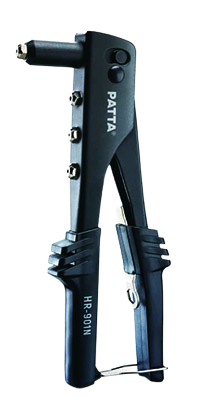
A fully manual, lever-operated tool that needs no power source. Portable, low cost and simple to maintain — the right choice for low-volume work, field installation and repairs.
Typical range: 2.4mm to 4.8mm blind rivets
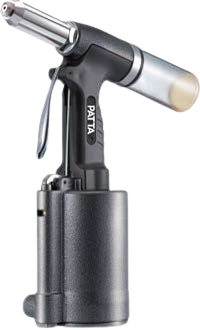
Uses compressed air to pull the mandrel automatically — a single trigger pull sets the rivet in a fraction of a second. Dramatically faster than hand tools and reduces operator fatigue on production lines with hundreds or thousands of rivets per shift.
Requires: compressor and air supply, typically 5–6 bar
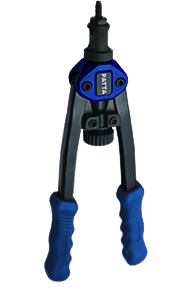
Installs threaded rivet nuts using a threaded mandrel that screws into the insert before pulling to collapse it. A distinct tool family from blind rivet riveters — used wherever a permanent threaded hole is needed in thin sheet metal.
Used with: rivet nuts / threaded inserts, not blind rivets
Empty the mandrel collection chamber regularly: A full chamber prevents mandrel stems from clearing and can jam the tool mid-cycle.
Check jaw condition: Worn jaws lose grip on the mandrel and cause slipped or incomplete pulls — replace them as soon as slipping is noticed.
Match the nosepiece to the rivet diameter: An incorrectly sized nosepiece damages the rivet head and reduces clamp consistency.
For pneumatic tools, use an in-line lubricator: Keeps internal seals conditioned and extends tool service life significantly.
Check air line fittings for leaks: A leaking connection reduces the pulling force delivered to the mandrel, causing inconsistent rivet setting.
Store with jaws relaxed: Leaving the tool under tension in storage accelerates spring and jaw wear.
A riveter installs blind rivets by gripping the rivet's mandrel and pulling it while the tool's nose holds the rivet body against the work. As the mandrel is pulled, it draws the rivet body up, expanding it on the blind side to clamp the material stack, then the mandrel snaps off at a pre-set breaking point.
A hand riveter is fully manual, portable and needs no power source — suited to low-volume work and site installation. A pneumatic riveter uses compressed air to pull the mandrel automatically, dramatically increasing installation speed — the correct choice for production-line and high-volume assembly work.
A hand nut riveter installs rivet nuts (threaded inserts), not blind rivets. It uses a threaded mandrel that screws into the rivet nut's internal thread and pulls to collapse the body, creating a threaded hole in thin sheet metal. It is a different tool family from a standard blind rivet riveter and is not interchangeable.
Most standard hand riveters handle blind rivets from around 2.4mm up to 4.8mm or 5mm diameter, depending on the nosepiece fitted. For larger diameters or structural rivets, a pneumatic or hydraulic riveter is generally required to generate sufficient pulling force.
Keep the nosepiece and jaws free of mandrel debris, replace worn jaws that no longer grip the mandrel securely, empty the mandrel collection chamber regularly, and for pneumatic tools, use an in-line air lubricator and check for air leaks at the fittings.
Excel Trading Corporation stocks hand riveters, pneumatic riveters and hand nut riveters at our store — 163, Sadar Patrappa Rd, Kumbarpet, Bengaluru 560002. We supply across Karnataka and India. Call +91 7204435253 or email info@exceltrading.in for pricing and availability.